Key Feature
The one-to-one mapping is a key feature that establishes a direct and exclusive link between each element and its corresponding counterpart. This mapping technique helps maintain clarity, organization, and accuracy, ensuring that no element is duplicated or overlooked. Whether applied in data management, coding, or user interfaces, this feature streamlines processes, minimizes confusion, and allows for more efficient management of complex systems. By enforcing unique associations, the one-to-one mapping enhances the structure and consistency of the project, ultimately improving user experience and system functionality.
Backend Feature: One-to-One Mapping Explanation: Person & userStocksTable
Overview
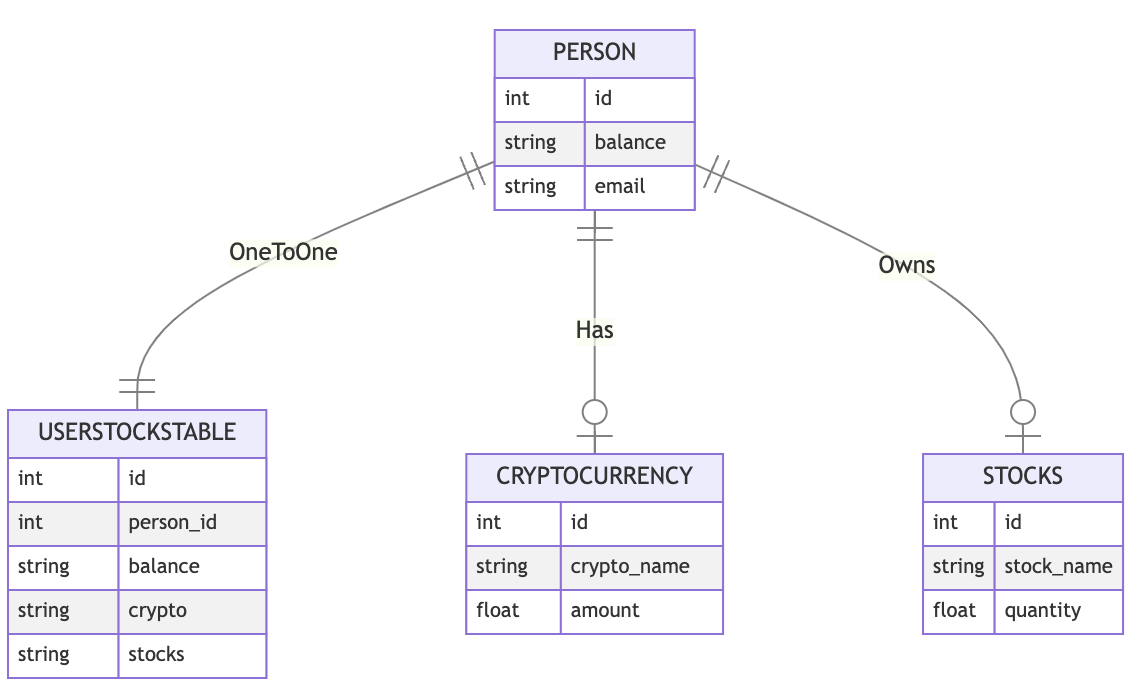
This Java code establishes a one-to-one relationship between two database entities:
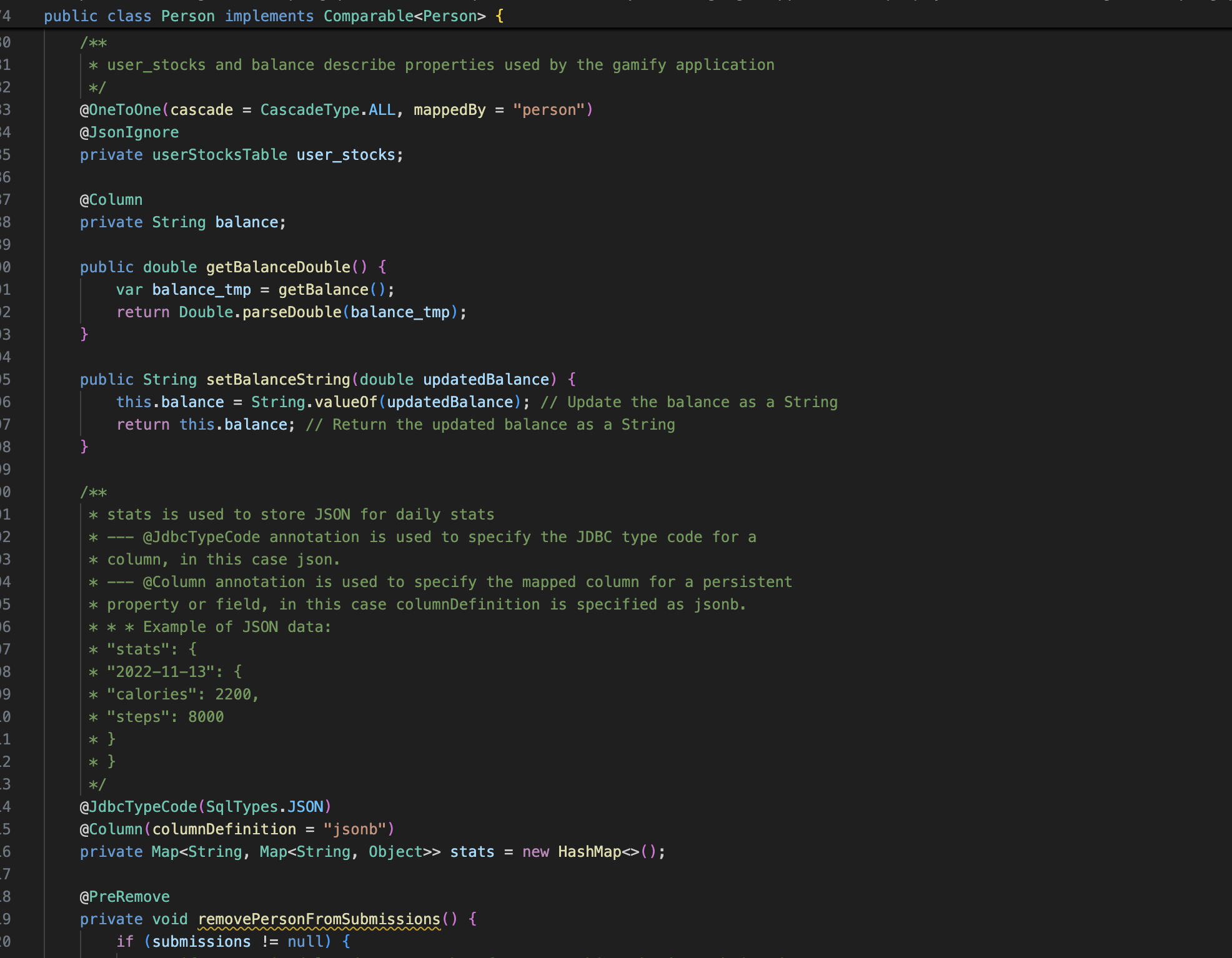
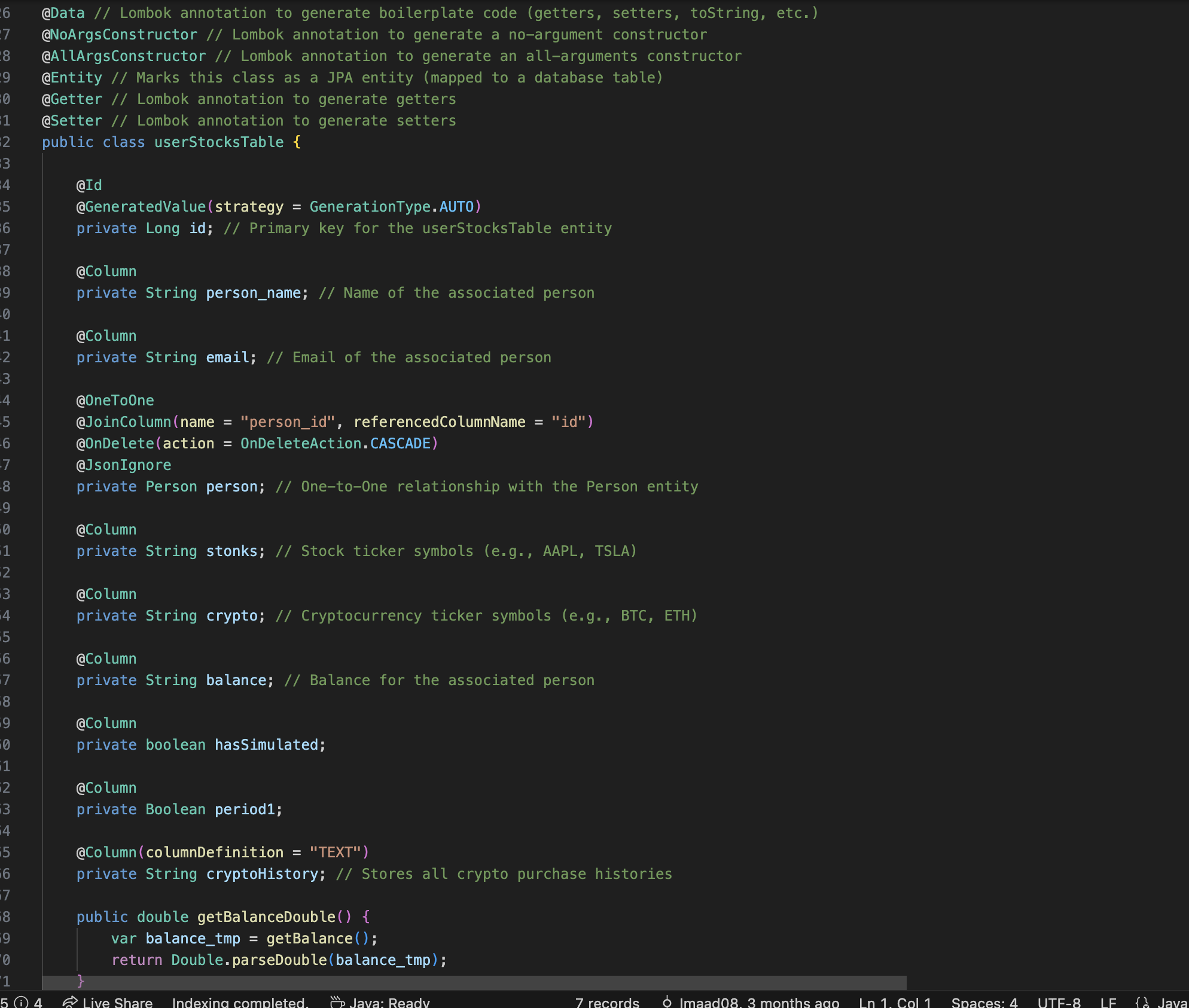
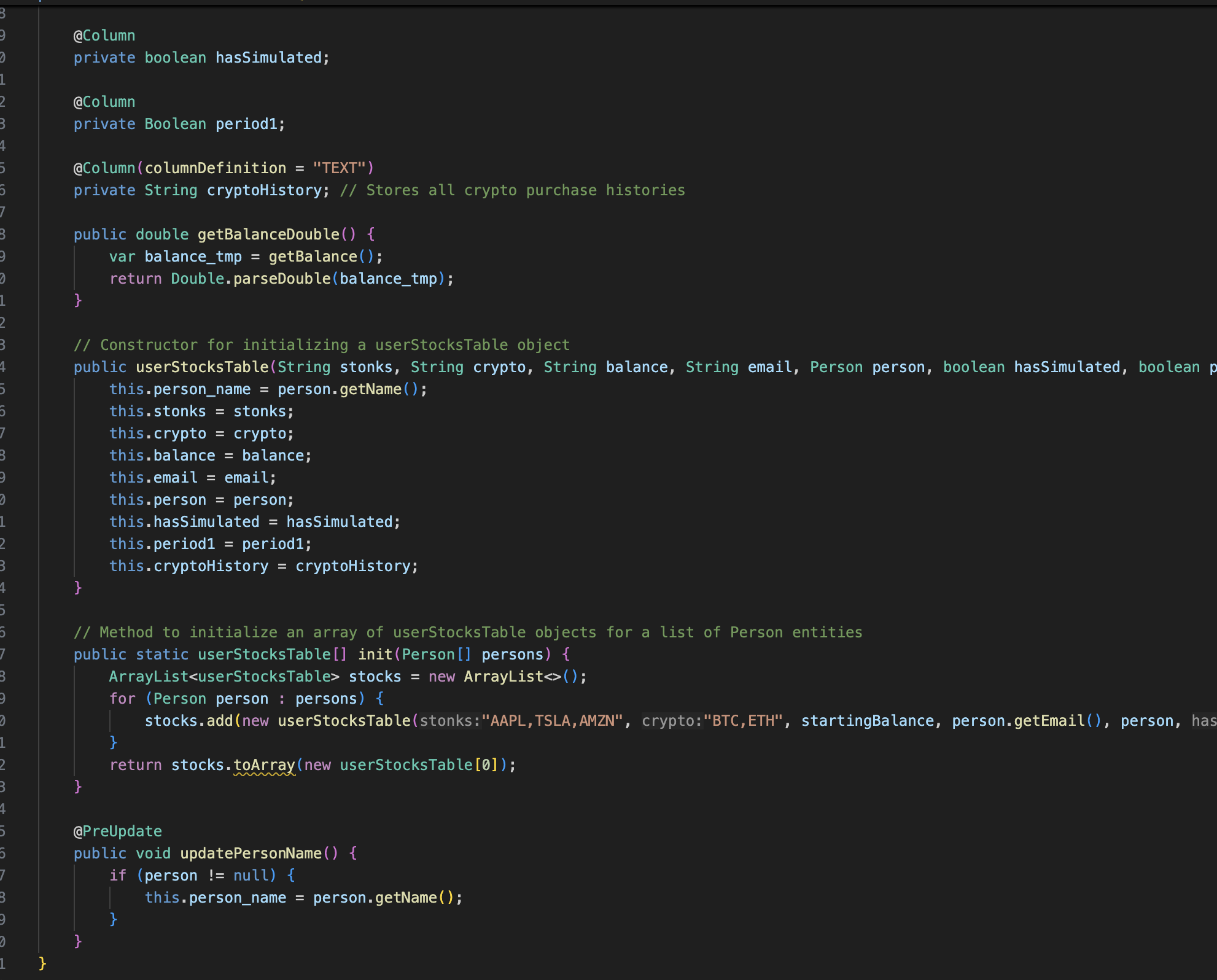
Person: The primary entity (master table) that holds major user details, including their balance.userStocksTable: A secondary entity that manages stocks, cryptocurrency, casino activity, and synchronizes balance updates.
By implementing JPA annotations (@OneToOne), this relationship ensures each Person object corresponds to exactly one userStocksTable object.
Entity: Person
The Person class represents a user and is responsible for:
✔ Storing basic user information.
✔ Maintaining the user’s balance.
✔ Managing JSON-based daily statistics.
✔ Establishing a one-to-one mapping with userStocksTable.
Key Fields and Annotations
@OneToOne(cascade = CascadeType.ALL, mappedBy = "person")
@JsonIgnore
private userStocksTable user_stocks;
Flowchart
Frontend Feature:
During the migration into the Nighthawk Coders repository, it became immediately clear that the varying styling choices from different teams led to a fragmented, inconsistent, and sometimes unpolished user interface. This lack of uniformity not only created a visually chaotic experience but also made navigating the repository less intuitive for users. As my group had been recognized for having the best UI design, we were tasked with a critical role—developing a universal theme that could be implemented across all projects within the repository. Our goal was to create a cohesive, streamlined aesthetic that would maintain visual consistency, enhance usability, and ultimately elevate the user experience. By aligning design elements such as color schemes, typography, and layout structures, we ensured that every team could easily adopt and implement the new theme.